When planning a bathroom remodel in Fairfield County, one decision almost always sparks the biggest debate between homeowners and designers: walk-in shower or bathtub? It sounds simple, but this single choice shapes your bathroom’s layout, cost, resale value, accessibility, and daily comfort for years to come.
At CT House Builders LLC, we’ve helped hundreds of homeowners across Fairfield, Norwalk, Stamford, Greenwich, Westport, and surrounding Connecticut towns navigate this exact decision. The truth? There’s no universal winner — only the right fit for your space, lifestyle, and long-term goals. In this guide, we’ll break down the pros, cons, costs, and key considerations so you can choose with confidence.
What Is a Walk-In Shower?
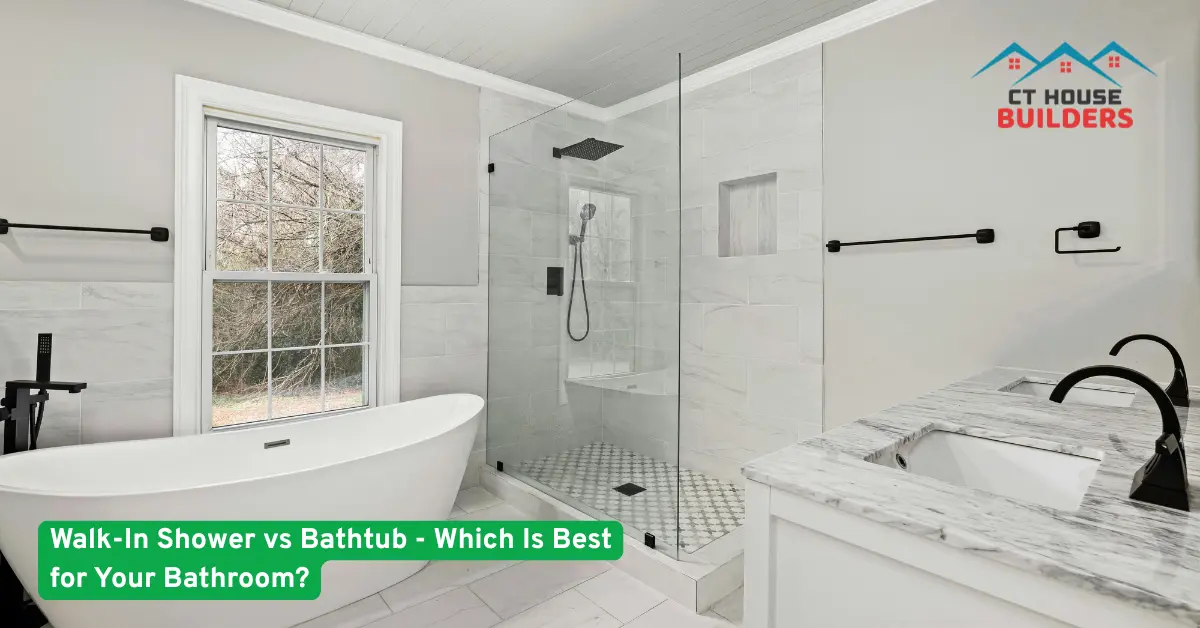
A walk-in shower is a low-threshold or completely curbless shower enclosure designed for a sleek, open, spa-like feel. Most modern walk-in showers feature frameless glass doors, custom-tiled walls, built-in benches, storage niches, and rainfall showerheads. They’re a favorite in contemporary bathrooms — especially for homeowners who value accessibility and clean design lines.
What Is a Bathtub?
A bathtub is the traditional bathroom fixture built for soaking, relaxation, and family bathing. From classic alcove tubs to freestanding soaking tubs and whirlpool styles, bathtubs offer a timeless appeal that many Connecticut homeowners still consider essential — particularly in family homes or houses with only one bathroom.
Walk-In Shower – Pros and Cons
Pros of a Walk-In Shower
1. Space Efficiency Walk-in showers take up less floor space than tubs, making them perfect for smaller bathrooms common in older Fairfield County homes. The open glass design also makes the room feel larger and more luxurious.
2. Accessibility and Aging-in-Place No high tub wall means no stepping hazard. This is a major win for seniors, anyone with mobility concerns, or families planning to live in their home long-term. Add grab bars, a built-in bench, and slip-resistant tile, and you’ve got a truly safe, future-ready space.
3. Modern Aesthetic Frameless glass, large-format tile, linear drains, and rainfall showerheads create a high-end, spa-inspired look that’s highly desirable in today’s real estate market.
4. Easier Cleaning With fewer nooks and crannies, walk-in showers are easier to maintain. No scrubbing under tub lips or fighting mildew in hard-to-reach corners.
5. Customization Multiple showerheads, steam features, body sprays, heated floors — walk-in showers offer nearly unlimited design flexibility.
Cons of a Walk-In Shower
- Higher upfront cost than a standard tub — custom tile, glass, and waterproofing add up
- No soaking option — if you love long baths, you’ll miss that
- Possible water splash without proper drainage and design
- Can feel cold in Connecticut winters without radiant floor heating
- Resale risk if your home has no other bathtub, especially for family buyers
Bathtub: Pros and Cons
Pros of a Bathtub
1. Relaxation and Wellness Nothing replaces a hot soak after a long Connecticut winter day. Bathtubs ease muscle tension, reduce stress, and offer a genuine wellness benefit no shower can replicate.
2. Family-Friendly Bathing small children, pets, or even hand-washing delicate laundry is dramatically easier with a tub. Most parents consider a tub essential during the early years.
3. Resale Value Protection Real estate experts consistently recommend keeping at least one bathtub in your home. Homes with zero tubs can turn off family buyers and narrow your resale market in Fairfield County’s competitive housing scene.
4. Lower Installation Cost A standard alcove tub is generally cheaper to install than a fully custom walk-in shower.
5. Variety of Styles Freestanding, alcove, drop-in, clawfoot, soaking, whirlpool — there’s a tub style for every design vision.
Cons of a Bathtub
- Takes up more space — a challenge in smaller bathrooms
- Harder to clean with more corners and surfaces
- Safety concern for seniors or those with limited mobility
- Uses more water than a quick shower
- Less modern feel in high-end primary suites
Walk-In Shower vs Bathtub: Side-by-Side Comparison
| Feature | Walk-In Shower | Bathtub |
|---|---|---|
| Space Needed | Less | More |
| Accessibility | Excellent | Limited |
| Relaxation | Moderate | Excellent |
| Family Use | Limited | Excellent |
| Resale Value | Great for master suite | Essential if it’s your only bath |
| Cleaning | Easier | Harder |
| Cost to Install | Higher (custom) | Lower (standard) |
| Modern Appeal | Very High | Classic |
Which One Is Best for Your Bathroom?
The right choice depends on four key factors:
1. Who Uses the Bathroom? Young families often need at least one tub. Adult-only households, seniors, and couples planning to age in place usually prefer walk-in showers.
2. How Big Is Your Bathroom? Small or compact bathrooms almost always benefit from a walk-in shower. Larger primary baths can often accommodate both — the ultimate setup.
3. What Are Your Resale Goals? If your home has multiple bathrooms, a luxurious walk-in shower in the primary suite is a strong selling point. If it’s your only bathroom, keep the tub.
4. What’s Your Lifestyle? Daily soakers need a tub. Fast-moving professionals and empty nesters usually prefer the efficiency of a walk-in shower.
Best of both worlds? If your bathroom layout allows, many Fairfield County homeowners are now choosing to install a freestanding soaking tub and a separate frameless glass walk-in shower. This combination delivers luxury, flexibility, and maximum resale appeal.
Frequently Asked Questions
Q1: Is a walk-in shower more expensive than a bathtub? Yes, walk-in showers — especially custom-tiled ones with frameless glass — typically cost more to install than a standard alcove bathtub. However, prices vary based on size, materials, and features. CT House Builders provides free, transparent estimates so you know exactly what you’re investing in.
Q2: Will removing my bathtub hurt my home’s resale value in Connecticut? If your home has multiple bathrooms, replacing one tub with a walk-in shower typically increases resale value, especially in the primary suite. But if it’s your only tub, most real estate experts recommend keeping at least one bathtub for family buyers.
Q3: Are walk-in showers safer than bathtubs? Generally, yes. Walk-in showers eliminate the step-over hazard of tub walls, making them much safer for seniors and anyone with mobility concerns. Adding grab bars, a built-in bench, and slip-resistant tile makes them even safer.
Q4: Can I have both a walk-in shower and a bathtub in the same bathroom? Absolutely — and it’s one of the most popular requests we get from Fairfield County homeowners. With the right layout and design, you can enjoy a luxurious soaking tub and a spacious walk-in shower in the same primary bathroom.
Q5: How long does a shower or tub replacement take? Most walk-in shower or bathtub installations are completed within 2–4 weeks, depending on scope, materials, and whether plumbing changes are required. A full bathroom remodel typically takes 3–8 weeks.
Ready to Transform Your Bathroom?
Whether you’re leaning toward a sleek walk-in shower, a relaxing soaking tub, or the ultimate combination of both — CT House Builders LLC is here to bring your vision to life. As Fairfield County’s trusted, licensed, and insured bathroom remodeling experts, we deliver transparent pricing, local Connecticut references, and warranty-backed craftsmanship on every project.
📞 Call us today at +1 (203) 615-8124 or Get Your Free Estimate to start designing the bathroom you’ve always wanted.
Serving Fairfield, Norwalk, Stamford, Bridgeport, Westport, Greenwich, Darien, Trumbull, Stratford, Danbury, and all of Fairfield County, CT.