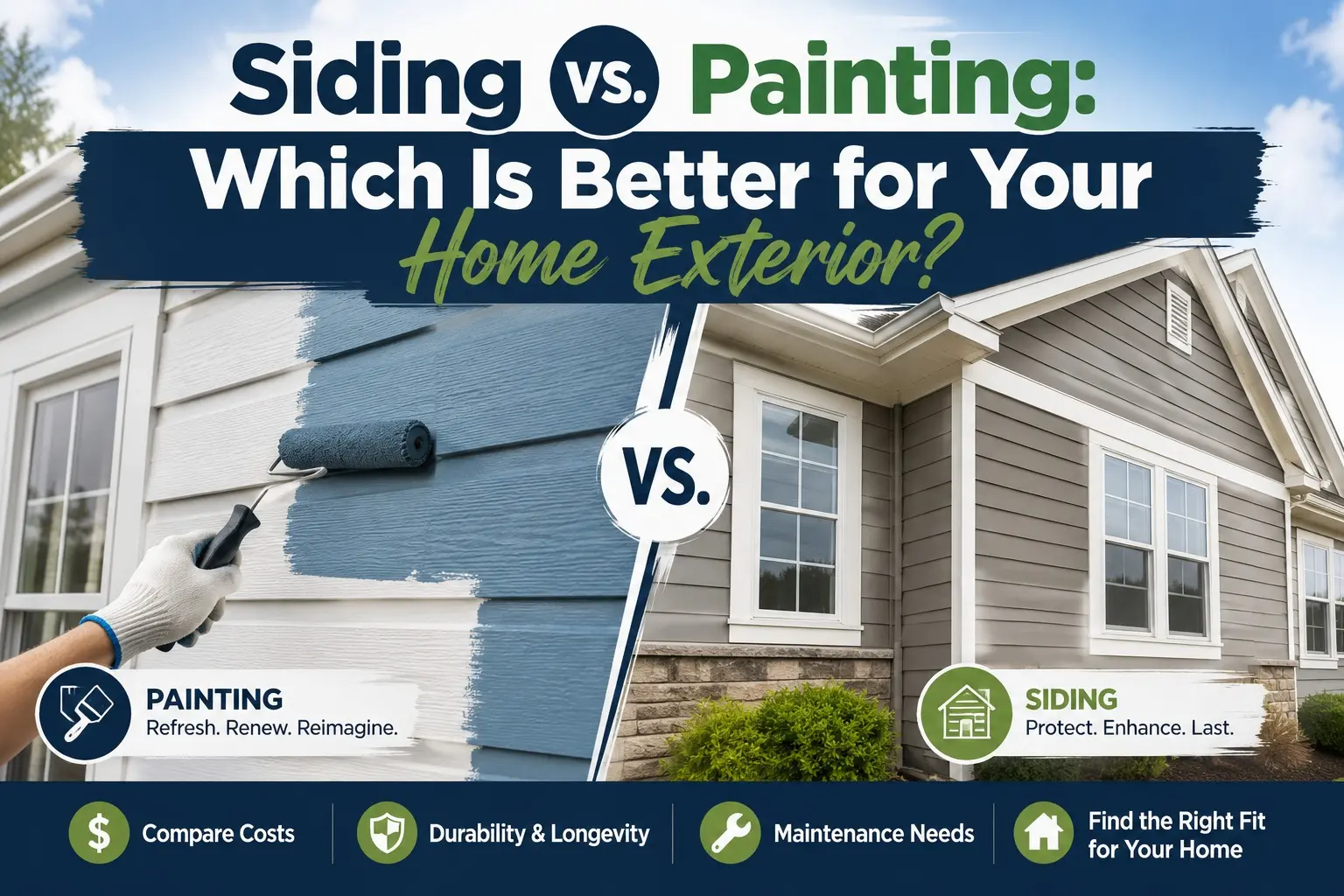
Siding vs painting both improve the appearance of your home, but they solve different problems. Painting refreshes the existing exterior surface, while siding adds a new protective layer around the home. The better choice depends on the condition of your exterior, the material already on your walls, your budget, and the level of maintenance you want.
A fresh coat of paint works well when the exterior structure is in good condition and needs an updated look. New siding is the stronger choice when the existing exterior has widespread damage, repeated paint failure, moisture problems, or aging materials.
At CT House Builders, we help homeowners look beyond appearance before planning an exterior improvement. The right solution should improve the look of the home and address the condition of the exterior itself.
What Is the Main Difference Between Siding and Painting?
The main difference is simple. Painting covers and protects an existing surface. Siding becomes part of the exterior wall system.
Exterior paint creates a finished layer over materials such as wood, stucco, brick, or fiber cement. It changes the color and improves the appearance of the surface.
Siding covers the exterior walls with installed panels or boards. Common materials include vinyl, fiber cement, engineered wood, and natural wood. The installation process often includes additional layers that help protect the wall from weather and moisture.
Painting is mainly a surface improvement. Siding is a larger exterior renovation.
When Is Exterior Painting the Better Choice?
Exterior painting is the better choice when the walls and existing materials remain in good structural condition.
Paint gives homeowners a major visual change without replacing the exterior material. A new color also helps modernize an older home.
Painting works best when:
- The existing exterior has minor cosmetic wear
- The surface is structurally sound
- There is no widespread rot or water damage
- The homeowner wants to change the exterior color
- The current material does not need replacement
Before painting, damaged areas still need proper repair. Peeling paint, cracked caulk, small holes, and surface damage should not simply be covered with a new coat of paint.
Good preparation plays a major role in the final result. The surface needs cleaning, repairs, and proper priming where required.
When Is New Siding the Better Choice?
New siding is the better choice when the existing exterior material has reached the end of its useful life.
Cracked boards, rotting wood, loose sections, moisture damage, and repeated maintenance needs often point toward replacement. Covering serious exterior damage with paint does not fix the material underneath.
New siding gives the home a completely updated exterior. It also replaces damaged materials that no longer provide reliable protection.
Siding is often the stronger long-term option when you are dealing with:
- Extensive rot or deterioration
- Repeated peeling and paint failure
- Cracks or damaged exterior panels
- Warped or loose boards
- High maintenance requirements
- An outdated exterior material
A full siding project costs more than painting, but it addresses problems that a new paint job cannot solve.
Which Option Costs Less: Siding or Painting?
Painting costs less upfront. Siding requires a larger initial investment.
Painting involves surface preparation, materials, labor, and repairs to damaged areas. The final cost depends on the size of the home, the type of exterior surface, and the amount of preparation required.
Siding costs more because it involves removing old materials when necessary, preparing the exterior walls, installing new siding, and finishing the project.
The lowest upfront cost does not always create the best value. Repainting a damaged exterior every few years adds ongoing expenses. Replacing failing materials with new siding can reduce repeated repair and painting costs.
What this really means is that homeowners should compare the condition of the exterior before comparing price alone.
Which Lasts Longer: Siding or Exterior Paint?
Siding generally lasts longer than an exterior paint finish.
Exterior paint faces direct exposure to sunlight, rain, temperature changes, and moisture. Over time, paint fades, cracks, peels, or loses its finished appearance.
Siding is designed to serve as a long-term exterior covering. Its lifespan depends on the material and the quality of installation.
Vinyl siding requires less maintenance and does not need regular repainting. Fiber cement siding offers strong durability but still needs periodic painting and maintenance. Wood siding creates a traditional appearance but requires more regular care.
The right material matters as much as the decision to install siding.
How Much Maintenance Does Each Option Require?
Painting requires ongoing maintenance. Homeowners need to watch for peeling, cracking, fading, and damaged caulking.
The amount of maintenance depends on the exterior material and local weather exposure. Wood surfaces usually require more attention than other materials.
Siding reduces some of this work, especially when homeowners choose low-maintenance materials. Vinyl siding usually needs cleaning to remove dirt and buildup. Other siding materials have their own maintenance requirements.
No exterior material is completely maintenance-free. The goal is to choose an option that fits the amount of upkeep you want for your home.
Which Gives Your Home a Bigger Visual Change?
Both options improve curb appeal, but they create different results.
Painting changes the color of the home while keeping the same exterior texture and material. It is a good choice for homeowners who like their current exterior design.
New siding changes more than the color. It can update the texture, profile, and overall character of the home.
For example, replacing worn siding with a new horizontal lap style or vertical board-and-batten design creates a more noticeable transformation than repainting the same old surface.
Siding gives you more freedom to change the exterior design. Painting gives you a faster way to refresh the design you already have.
Does Siding Provide Better Exterior Protection?
Siding provides greater protection when the existing exterior material is damaged or failing.
The siding itself acts as an exterior covering between the wall structure and outdoor weather. A properly completed siding project protects the home while replacing worn materials.
Paint protects the surface it covers, but it does not replace damaged boards or restore materials affected by rot.
This is why the condition of the existing exterior matters. A sound surface benefits from quality paint. A failing surface needs repair or replacement before appearance becomes the main concern.
How Does Climate Affect the Decision?
Your home’s exterior faces rain, humidity, sunlight, wind, and changing temperatures. These conditions affect both paint and siding.
Exterior paint needs to handle constant weather exposure. Poor surface preparation or an unsuitable paint product often leads to early peeling and failure.
Siding materials respond differently to weather as well. The right choice depends on the home’s location, exposure, and exterior construction.
A professional exterior inspection helps identify the areas receiving the most weather exposure. It also reveals damaged materials that are easy to miss from the ground.
Should You Paint Over Old Siding?
Painting old siding works when the material remains in good condition and is suitable for painting.
However, paint should not become a temporary cover for serious damage. Rotten wood, loose boards, deep cracks, and moisture-related problems need proper repairs.
The first step is to inspect the siding. Once the material is structurally sound, you can decide whether painting will provide the result you want.
When the siding itself is failing across large sections of the home, replacement is usually the better solution.
How Do You Choose Between Siding vs Painting?
How Do You Choose Between Siding vs Painting:
Start with the condition of your exterior.
Choose painting when:
- Your exterior materials are in good condition
- You want a lower upfront cost
- Your main goal is a color change
- You want to refresh the current appearance of your home
- Only minor surface repairs are needed
Choose new siding when:
- The existing exterior has widespread damage
- Rot or deterioration affects the current material
- You are tired of repeated painting and repairs
- You want to change the exterior material or design
- The current siding no longer provides reliable protection
The right choice should solve the actual problem. A beautiful paint color does not repair failing exterior materials. At the same time, full siding replacement is unnecessary when the existing exterior remains in excellent condition.
Get Professional Help With Your Exterior Remodeling Project
Your home’s exterior deserves more than a quick visual fix. The best decision starts with a clear understanding of the materials already on your home.
CT House Builders helps homeowners plan exterior remodeling projects based on the condition, design, and long-term needs of the property. Whether your home needs exterior repairs, new siding, or a complete exterior update, our team helps you choose an approach that makes sense for your home.
Contact CT House Builders today to discuss your exterior remodeling project and get professional guidance for your home.
FAQs
Can I install siding over existing siding?
Yes. Installation depends on the condition of the existing material and the exterior wall structure.
Can I change my siding color without repainting?
Yes. New siding comes in a wide range of factory-finished colors.
Does siding installation increase the thickness of exterior walls?
Yes. New siding adds layers to the existing exterior wall assembly.
Can exterior painting be done during a remodeling project?
Yes. Painting fits well into larger exterior renovation work when scheduled at the right stage.
Should gutters be removed before installing new siding?
No. Gutters do not always need full removal, but sections often require temporary adjustment during the work.