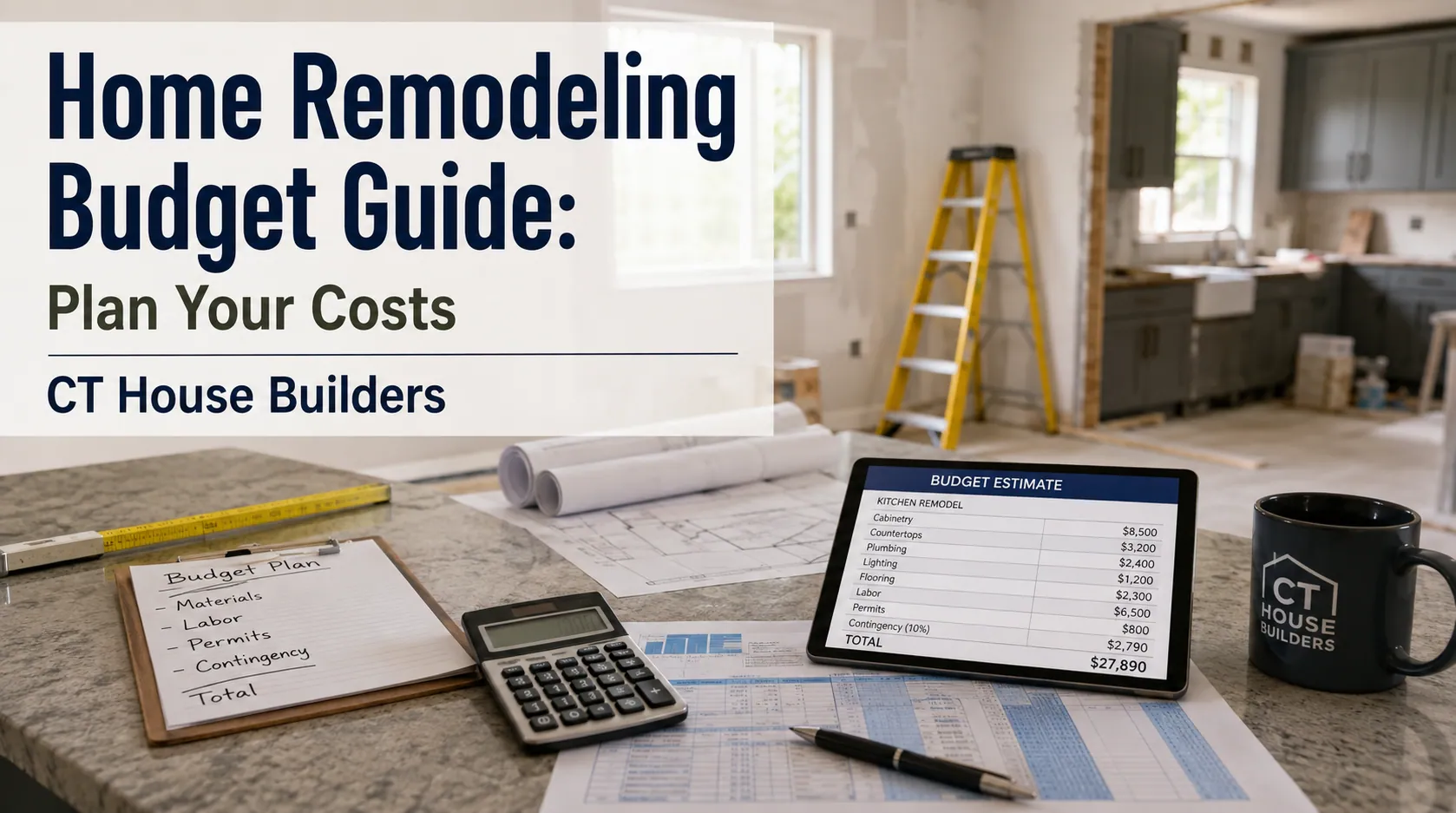
Home remodeling becomes stressful when the budget is based on wishful thinking instead of the actual scope of work. A realistic remodeling budget starts with the project you need, separates essential costs from upgrades, accounts for labor and permits, and keeps 10–20% aside for unexpected problems. This approach gives you a spending limit that works in the real world rather than a number that looks good on paper.
For Connecticut homeowners, costs can vary significantly based on the size of the project, location, materials, labor, structural changes, and the age of the home. CT House Builders works with homeowners across Fairfield County on kitchen and bathroom remodeling, full-home renovations, additions, roofing, siding, windows, doors, and other residential projects.
What Should You Consider Before Setting a Remodeling Budget?
Start by defining exactly what you want to change.
A bathroom refresh and a whole-home renovation do not belong in the same budget category. Replacing fixtures, painting walls, and installing new flooring requires a different level of investment than moving walls, updating plumbing, replacing electrical systems, or changing the home’s layout.
Write down your project scope before researching prices. Separate your list into:
- Must-haves: Repairs and improvements the project needs.
- Important upgrades: Changes that improve comfort or functionality.
- Nice-to-haves: Features you would like but can remove when necessary.
- Future projects: Improvements that do not need to happen during this renovation.
This simple separation prevents one common budgeting mistake: spending too much on finishes before accounting for construction work.
How Much Should You Budget for a Home Remodel?
There is no single price that fits every home remodel. The final cost depends on the scope, square footage, materials, labor, layout changes, and existing conditions.
For example, CT House Builders’ current Connecticut cost guides show how dramatically project types can differ. A kitchen remodel may range from roughly $25,000 to $85,000 or more, while a complete bathroom renovation commonly falls within a different range depending on the size, materials, plumbing, and complexity.
A full-home renovation requires an even larger budget because it may involve several systems at once, including:
- Kitchen and bathroom remodeling
- Flooring
- Plumbing
- Electrical work
- HVAC
- Windows and doors
- Insulation and drywall
- Roofing and siding
- Structural modifications
- Painting and finishing
The right approach is to get a project-specific estimate instead of relying on a generic online average.
How Do You Calculate a Realistic Remodeling Budget?
A useful starting formula is:
Total Remodeling Budget = Construction Costs + Materials + Permits and Professional Fees + Contingency
For example, suppose your estimated construction and material costs are $60,000. Adding a 15% contingency gives you another $9,000.
That puts your working budget at approximately $69,000.
The contingency is not money you should automatically spend. It is protection against problems that only become visible once work begins.
Older homes are especially likely to reveal issues behind walls, beneath floors, or around plumbing and electrical systems.
Which Remodeling Costs Should Be Included?
A realistic budget needs to account for more than the visible finishes.
Labor
Labor is one of the largest parts of a remodeling budget. Depending on the project, you may need general contractors, electricians, plumbers, carpenters, painters, tile installers, roofers, or other specialists.
A lower material price does not necessarily mean a lower project cost. Installation complexity matters just as much.
Materials and Finishes
Your selections have a direct effect on the final price.
Consider the difference between:
- Stock and custom cabinetry
- Standard and premium plumbing fixtures
- Laminate and natural stone countertops
- Basic and designer tile
- Standard and specialty windows
- Vinyl and hardwood flooring
You do not need the most expensive materials to create a high-quality remodel. A well-planned combination of mid-range and premium finishes often gives you better control over the overall budget.
Permits and Professional Services
Structural, electrical, plumbing, and layout changes may require permits, drawings, inspections, or engineering services.
These expenses should be discussed during planning rather than added as surprises after construction starts.
Demolition and Disposal
Removing cabinets, flooring, walls, fixtures, or other existing materials creates labor and disposal costs.
Homeowners sometimes focus on the cost of installing the new materials and forget that the old materials need to be removed first.
Temporary Living Costs
Large remodeling projects can affect kitchens, bathrooms, bedrooms, or the entire house.
Your budget may need to include temporary accommodation, storage, meals, or other living expenses while construction is underway.
Why Should You Keep a Contingency Fund?
A contingency fund protects your main budget from unexpected problems.
Set aside around 10–20% of the planned remodeling cost for unforeseen expenses. CT House Builders uses the same general 10–20% planning range in its renovation guidance because demolition can uncover issues such as water damage, outdated plumbing, electrical problems, or structural concerns.
For example:
- $40,000 project → $4,000–$8,000 contingency
- $60,000 project → $6,000–$12,000 contingency
- $100,000 project → $10,000–$20,000 contingency
The exact amount depends on the age and condition of your home and the complexity of the work.
How Can You Prioritize Remodeling Expenses?
When the initial estimate is higher than your available budget, do not immediately choose the cheapest materials.
Start with the parts of the project that affect safety, structure, functionality, and long-term performance.
For example, repairing damaged framing should take priority over upgrading cabinet hardware. Replacing unsafe electrical components should come before choosing decorative lighting.
A useful priority order is:
- Structural and safety repairs
- Plumbing, electrical, and HVAC requirements
- Layout and functional improvements
- Durable materials
- Cosmetic finishes
- Optional luxury features
This keeps the project focused on improvements that matter most.
How Can You Save Money Without Sacrificing Quality?
You do not have to make your remodel cheap. You need to spend strategically.
Keep the Existing Layout When Possible
Moving plumbing, electrical lines, walls, or gas connections can increase labor and construction costs.
Keeping the existing layout where it already works can free up money for better materials and finishes. CT House Builders’ kitchen remodeling guidance similarly recommends keeping plumbing locations when possible to control costs.
Choose Mid-Range Materials
A premium finish is not automatically a better investment.
Look for materials that offer the right combination of durability, appearance, maintenance, and price. Spend more on features you use every day and less on details that have little practical impact.
Plan Before Demolition
Changing your mind after construction begins can become expensive.
Finalize major selections, layouts, fixtures, appliances, and finishes before work starts. Good planning reduces delays, change orders, and unnecessary material purchases.
Compare Detailed Contractor Estimates
Do not compare contractors based only on the final number.
Ask what each estimate includes. One contractor may include permits, demolition, disposal, installation, and finishing work while another quote may leave some of those costs out.
A detailed proposal gives you a much clearer basis for comparison.
What Should You Ask a Remodeling Contractor About the Budget?
Before signing a contract, ask questions that reveal what your estimate actually covers.
Ask:
- What work is included in the estimate?
- Which materials are included?
- Are permits included?
- Who handles inspections?
- How are unexpected conditions handled?
- What happens when I request a change?
- Is the price fixed after the scope and selections are finalized?
- What payment schedule applies?
- What warranty is provided?
- What is the expected project timeline?
CT House Builders states that after design and selections, it provides a detailed fixed-price proposal with a clear scope. The company also offers free consultations and estimates for homeowners in Fairfield County and nearby areas.
How Can Connecticut Homeowners Build a More Accurate Remodeling Budget?
Local labor, permitting requirements, property conditions, and material availability all influence remodeling costs.
That makes local project experience valuable when preparing an estimate. A contractor familiar with Connecticut homes can assess the existing property, identify potential issues, explain permit requirements, and create a scope based on the actual project.
CT House Builders serves homeowners throughout Fairfield County, including Fairfield, Stamford, Westport, Greenwich, Darien, Norwalk, Bridgeport, Trumbull, Stratford, Monroe, Easton, Weston, Wilton, New Canaan, Ridgefield, Redding, Brookfield, and Danbury.
The company provides kitchen and bathroom remodeling, full-home renovations, windows and doors, roofing, siding, decks, additions, and new construction.
What Are the Most Common Remodeling Budget Mistakes?
Several mistakes repeatedly push homeowners over budget.
Setting the Budget Before Defining the Scope
You cannot create an accurate budget for a project you have not clearly defined.
Forgetting Hidden Conditions
A home may look fine on the surface while hiding damaged plumbing, outdated wiring, water damage, or structural problems.
Spending Too Much on Finishes
Beautiful countertops and fixtures do not solve structural or functional problems.
Ignoring Labor Costs
Material prices are easy to research. Installation, coordination, demolition, and specialized labor are just as important.
Making Changes During Construction
Last-minute changes often create additional labor, material, and scheduling costs.
Having No Contingency
A budget with every dollar assigned leaves no room for unexpected repairs.
How Do You Know Whether Your Remodeling Budget Is Realistic?
Your budget is realistic when it matches the scope of work, your home’s condition, your material choices, local labor costs, and a reasonable contingency fund.
It should not leave you financially stretched before construction even begins.
A good remodeling budget gives you three numbers:
Target budget: What you ideally want to spend.
Maximum budget: The highest amount you are comfortable investing.
Contingency: Money reserved for unexpected costs.
This creates a clear decision-making framework throughout the project.
For example, your target might be $60,000, your contingency could be $9,000, and your absolute maximum might be $75,000. That makes it easier to evaluate upgrades without losing control of the project.
Why Is Professional Budget Planning Worth It?
A remodeling budget is more than a spreadsheet. It is a plan for how your money will move through the project.
Professional planning helps connect your goals with the actual condition of your home. It can identify required work, separate necessary expenses from optional upgrades, and give you a clearer idea of what the project will require before construction begins.
CT House Builders follows a process that starts with understanding the homeowner’s goals, followed by a site assessment, design and planning, and project execution.
That process matters because accurate budgeting starts with accurate information.
Final Thoughts
The best remodeling budget is not the lowest number you can find. It is the amount you can realistically afford while covering the full scope of work and protecting yourself from unexpected costs.
Start by defining your priorities. Get a detailed estimate. Account for labor, materials, permits, demolition, and temporary living costs. Keep 10–20% available for unexpected issues. Most importantly, make your major decisions before construction begins.
For homeowners in Fairfield County, CT House Builders provides remodeling and renovation services with transparent pricing, licensed professionals, and free consultations.
Get a Free Quote from CT House Builders
Frequently Asked Questions
1. Should I use my entire savings for a home remodeling project?
No. Your remodeling budget should be separate from money reserved for emergencies and essential household expenses. Keep your contingency fund within the project budget, but maintain your personal emergency savings separately.
2. Is it better to remodel one room at a time?
It depends on your goals, budget, and the relationship between the rooms. Remodeling one area at a time can make cash flow easier, while completing connected work together may reduce duplicated labor and construction costs.
3. Should I buy remodeling materials before hiring a contractor?
Usually, major purchases should wait until the scope, measurements, specifications, and installation requirements have been confirmed. Buying materials too early can result in incorrect quantities, incompatible products, or storage problems.
4. How should I handle a remodeling project when my budget is fixed?
Tell the contractor your maximum budget at the beginning. A clear budget allows the scope, materials, and priorities to be adjusted before construction rather than after costs have already accumulated.
5. Can a contractor help me decide which remodeling upgrades are worth the money?
Yes. An experienced remodeling contractor can explain how different materials, layouts, construction methods, and upgrades affect the project cost. This helps you decide where to spend more and where a simpler option makes better financial sense.