Before starting a home renovation, you should define your goals, set a realistic budget, assess the existing condition of your home, understand permit requirements, choose materials carefully, and create a clear project plan. Renovation decisions made before construction begins have a direct effect on cost, timeline, and the final result.
A renovation is more than choosing new cabinets, flooring, or paint colors. Structural conditions, plumbing, electrical systems, permits, material availability, and the way different trades work together all matter. CT House Builders starts with an initial consultation and site assessment before moving into design, planning, pricing, material procurement, and construction.
Why Should You Define Your Renovation Goals First?
You should know what you want the renovation to accomplish before choosing materials or starting construction.
Ask yourself what is not working in your current home. Do you need more storage? Better functionality? More living space? An updated kitchen? A larger bathroom? Better energy efficiency?
Your answer determines the scope of the project.
For example, replacing cabinets and countertops is very different from changing the kitchen layout. Moving a sink, wall, or appliance may involve plumbing, electrical, structural, and permitting considerations.
A clear goal helps your contractor build the project around what matters most to you.
How Should You Set a Home Renovation Budget?
Start with the project scope rather than choosing a budget based only on a number that sounds comfortable.
List the work you want completed and separate essential improvements from upgrades that would be nice to have. Then discuss materials, labor, permits, design requirements, and potential structural work with your contractor.
Your budget should account for the complete project rather than just visible finishes.
Kitchen cabinets, countertops, flooring, tile, paint, and fixtures are easy to notice. Less visible work such as electrical wiring, plumbing, framing, insulation, and drywall can have a major effect on the final cost.
CT House Builders provides detailed proposals covering the scope, timeline, and pricing before renovation work begins.
Should You Have Your Home Inspected Before Renovation?
Yes, especially when renovating an older home or making major changes.
A site assessment can identify existing conditions that may affect the renovation. These can include structural concerns, outdated electrical systems, plumbing problems, moisture damage, uneven floors, or walls that cannot be removed without additional structural work.
Finding these issues before construction begins gives you more control over the budget and schedule.
CT House Builders includes a site assessment in its renovation process to evaluate measurements, existing conditions, and structural or design considerations.
Do You Need Permits for a Home Renovation?
Some renovation projects require permits, particularly when the work affects structural elements, electrical systems, plumbing, mechanical systems, or the exterior of the home.
The requirements depend on the project and local jurisdiction.
For Connecticut homeowners, permit requirements can vary by municipality and project type. Major work such as structural changes, electrical or plumbing modifications, additions, and certain exterior improvements may require approval before construction begins.
The safest approach is to determine permit requirements during the planning stage rather than after work has started.
CT House Builders states that it helps homeowners with drawings, permits, inspections, and project closeout.
How Should You Choose Materials for a Home Renovation?
Choose materials based on how you use the space, your budget, maintenance expectations, and the overall design.
A material that looks good in a showroom may not be the best choice for a busy family kitchen or high-traffic hallway.
Think about:
- Durability
- Maintenance
- Moisture resistance
- Cleaning requirements
- Expected lifespan
- Style
- Availability
- Cost
- Compatibility with the existing home
Material availability matters too. Delayed cabinets, windows, fixtures, or specialty finishes can affect the construction schedule.
CT House Builders includes material procurement after design and selections so materials and fixtures can be prepared before construction begins.
Should You Finalize the Design Before Construction Starts?
Yes. Major design decisions should be made before construction whenever possible.
Changing the layout after demolition begins can create additional labor, material costs, and delays.
A good design plan should establish the layout, finishes, fixtures, storage, lighting, colors, and other important details before construction moves too far forward.
CT House Builders develops customized plans with layout options, materials, and finishes during its design and planning stage.
This gives homeowners an opportunity to make decisions while changes are still easier to manage.
How Long Will a Home Renovation Take?
The timeline depends on the size and complexity of the project.
A smaller remodeling project may take several weeks, while a major renovation or addition can take considerably longer. CT House Builders states that many remodeling projects are completed within 3–8 weeks, depending on scope and size, while larger projects require a customized schedule.
Your timeline can be affected by:
- Project size
- Structural changes
- Permit approvals
- Material availability
- Number of trades involved
- Custom products
- Design changes
- Inspection requirements
- Unforeseen conditions
A realistic schedule is better than an overly optimistic promise. Your contractor should explain the expected sequence of work before construction begins.
Should You Stay in Your Home During Renovation?
It depends on the project.
A small bathroom update or room renovation may allow you to remain at home. A full-home renovation, major addition, or project involving essential plumbing, electrical, heating, or multiple living areas can make staying in the house difficult.
Think about dust, noise, construction access, temporary loss of rooms, and safety.
Discuss this with your contractor before work starts so you know which areas will be unavailable and for how long.
How Can You Avoid Costly Changes During Construction?
The best way to control renovation costs is to make important decisions before construction starts.
Frequent changes can affect more than one part of the project. Moving a wall can change electrical work. Moving a sink can change plumbing. Changing a tile after installation can create additional labor and material costs.
Before construction, confirm your:
- Layout
- Materials
- Fixtures
- Appliances
- Colors
- Cabinet style
- Flooring
- Lighting
- Plumbing fixtures
- Doors and windows
You do not need to predict every detail months in advance, but major decisions should be settled before the corresponding work begins.
How Should You Choose a Home Renovation Contractor?
Look for a contractor who can clearly explain the scope, pricing, schedule, materials, communication process, and responsibilities.
Licensing and insurance matter, but so does project management.
Ask who will coordinate the different trades, how changes will be handled, what is included in the proposal, and how progress will be communicated.
CT House Builders identifies licensed professionals, transparent proposals, dedicated project management, clean worksites, and warranty and post-project support as part of its approach.
You should feel comfortable asking questions before signing a renovation agreement. A good contractor should want the scope to be clear before work begins.
What Should Be Included in a Home Renovation Proposal?
A detailed proposal should make it clear what you are paying for.
It should outline the scope of work, materials, expected timeline, pricing, and any important project conditions.
Ask about items that are easy to overlook, such as demolition, disposal, permits, inspections, installation, finishing work, cleanup, and post-project support.
CT House Builders states that its proposals include the scope, timeline, and materials, with a fixed-price proposal provided after design and selections.
The clearer the proposal, the easier it is to compare expectations and avoid misunderstandings later.
Why Is Planning So Important Before a Home Renovation?
Planning gives you control before construction introduces pressure.
Once demolition begins, decisions become more expensive and time-sensitive. A well-planned renovation establishes the goals, layout, budget, materials, permits, and construction sequence before the crew starts changing the home.
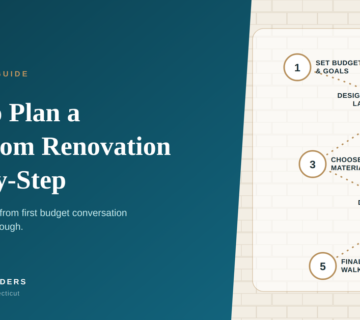
CT House Builders follows a structured process that moves from consultation and site assessment to design, proposal approval, material procurement, renovation, final walkthrough, and post-project support.
That process gives homeowners a clearer path from the initial idea to the finished space.
How Can CT House Builders Help With Your Renovation?
CT House Builders provides residential renovation and remodeling services across Fairfield County, Connecticut, including kitchen and bathroom remodeling, windows and doors, home additions, decks, drywall and painting, siding and roofing, and new construction.
The team handles the project from initial consultation through final walkthrough. The process includes site assessment, design and planning, proposal and approval, material procurement, renovation, and post-project support.
Whether you are updating one room or planning a larger home transformation, the first step is understanding what your home needs and what you want the renovation to achieve.
Planning a home renovation in Fairfield County? Contact CT House Builders for a free consultation and written estimate, and start your project with a clear plan.
Frequently Asked Questions
How early should I plan a home renovation?
Start planning before selecting materials or scheduling construction so you have time to define the scope, budget, design, and required permits.
Do I need a contractor for a home renovation?
A contractor is especially valuable for projects involving multiple trades, structural changes, permits, plumbing, electrical work, or major remodeling.
How much should I budget for unexpected renovation costs?
Keep room in your budget for unforeseen conditions, especially when renovating older homes or making structural changes.
How long does a typical home renovation take?
The timeline depends on the scope, but CT House Builders states that many remodeling projects take approximately 3–8 weeks.
Does CT House Builders offer free renovation estimates?
Yes. CT House Builders offers free consultations and estimates for homeowners in Fairfield County and nearby areas.