The kitchen is the heart of every home — and its layout is everything. Whether you’re cooking a weekday dinner or hosting a holiday gathering, a well-planned kitchen layout can transform your daily routine. The right design improves workflow, maximizes space, and makes cooking genuinely enjoyable.
If you’re planning a kitchen remodel in Fairfield County, Connecticut, or simply want to reimagine your current setup, this guide covers 12 proven kitchen layout ideas that improve both function and flow. From classic configurations to modern open-concept designs, there’s something here for every home and lifestyle.
Why Kitchen Layout Matters for Workflow
Before diving into specific kitchen layout ideas, it’s worth understanding what makes a kitchen design truly functional. Designers often refer to the ‘kitchen work triangle’ — the relationship between the sink, stove, and refrigerator. When these three zones are positioned efficiently, movement between them is smooth, reducing effort and saving time.
Beyond the triangle, modern kitchen design also considers dedicated prep zones, appliance placement, storage access, and traffic flow. The goal is a kitchen where everything is within reach and nothing gets in the way.
12 Kitchen Layout Ideas to Transform Your Space
1. The Classic L-Shaped Kitchen
One of the most popular kitchen layouts, the L-shaped design uses two adjoining walls to create an efficient work zone. It opens up the center of the room, making it ideal for smaller kitchens or open-plan living spaces.
Best for: Small to medium kitchens, open-concept homes, families who like to socialize while cooking.
Pro tip: Add a kitchen island opposite the L to double your prep space and storage.
2. The Galley Kitchen Layout
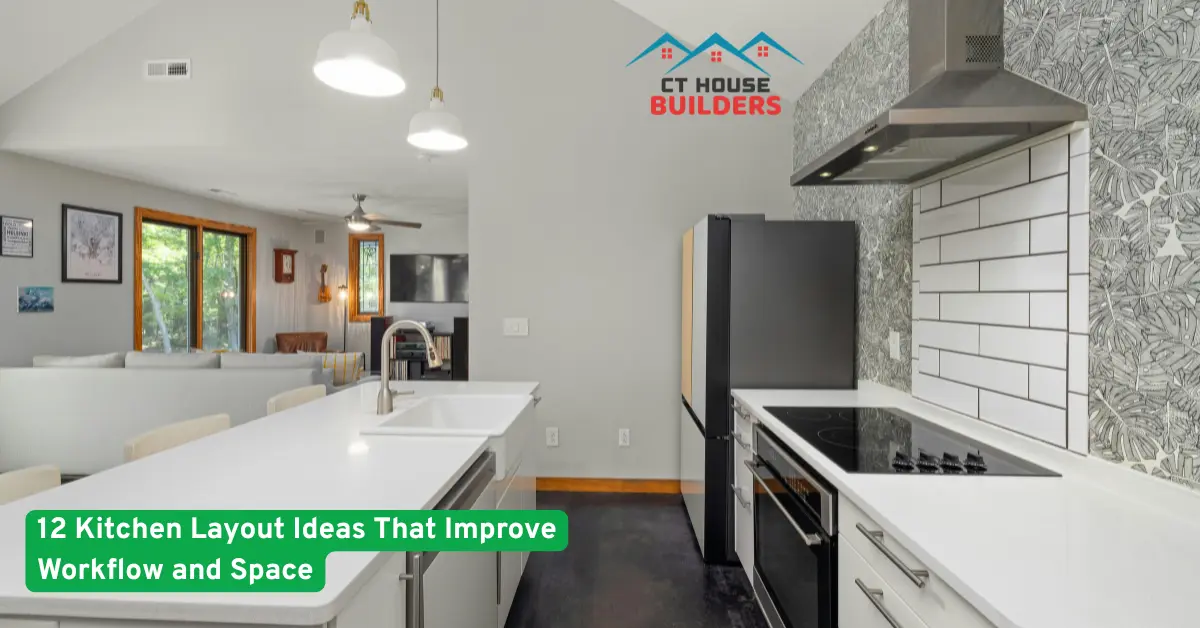
Two parallel countertops facing each other — the galley layout is a chef’s favorite for good reason. Everything is within arm’s reach, and the linear flow minimizes wasted steps. It’s a particularly smart layout for narrow kitchens.
Best for: Narrow spaces, single-cook households, apartments, or high-efficiency cooking setups.
Pro tip: Use light-colored cabinetry and under-cabinet lighting to keep the space feeling open.
3. The U-Shaped Kitchen
The U-shaped kitchen wraps counters and cabinets around three walls, giving you maximum workspace and storage. It creates a highly functional triangle and works especially well when you have ample square footage.
Best for: Larger kitchens, multi-cook households, homeowners who need serious storage.
Pro tip: Leave at least 48 inches between parallel counters to avoid a cramped feel.
4. The Island Kitchen Layout
Adding an island to any base layout — L-shaped, U-shaped, or open-plan — instantly upgrades your kitchen’s functionality. Islands can serve as prep stations, breakfast bars, storage hubs, or even casual dining areas.
Best for: Medium to large kitchens, entertaining, families with kids.
Pro tip: Integrate outlets, a prep sink, or a wine fridge into the island to maximize its usefulness.
5. The One-Wall Kitchen
Also known as a single-wall or straight kitchen, this layout lines everything up against a single wall. It’s compact, clean, and surprisingly functional when designed well.
Best for: Studio apartments, lofts, open-plan spaces where kitchen presence should be minimal.
Pro tip: Add a rolling cart or fold-out table for extra prep space when needed.
6. The Peninsula Kitchen
Think of a peninsula as an attached island — connected to one wall or counter, extending out into the room. It delivers many of the benefits of a full island without requiring as much floor space.
Best for: Medium kitchens, homeowners who want island benefits without losing walkway space.
Pro tip: Use bar stools on the open side to create a casual dining or homework station.
7. The Open-Concept Kitchen Layout
Open-concept kitchens remove walls between the kitchen and living or dining areas, creating one large, flowing space. This layout is incredibly popular in Fairfield County homes and is excellent for families and entertainers.
Best for: Modern homes, families, frequent entertainers, and anyone who wants a social kitchen.
Pro tip: Use consistent flooring, lighting, and a unified color palette to tie all zones together seamlessly.
8. The Zoned Kitchen Layout
Rather than organizing the kitchen around the classic triangle, a zoned layout divides the space into dedicated activity areas: a prep zone, a cooking zone, a cleanup zone, and a pantry or storage zone. This is ideal for busy households or professional-style kitchens.
Best for: Large kitchens, multi-cook families, homeowners who batch cook or meal prep regularly.
Pro tip: Place the prep zone between the fridge and cooktop for the most logical flow.
9. The Galley with Breakfast Nook
A hybrid of the galley layout, this design adds a small breakfast nook or banquette seating at one end of the kitchen. It creates a cozy dining corner without needing a separate dining room.
Best for: Smaller homes that lack a formal dining area, families with young children.
Pro tip: Built-in bench seating with storage drawers underneath adds function to a tight space.
10. The Hidden Storage Kitchen
Popular in contemporary and Scandinavian-inspired design, the hidden storage kitchen conceals appliances, pantry goods, and even the refrigerator behind seamless cabinet panels. The result is a sleek, clutter-free aesthetic.
Best for: Minimalist design lovers, open-plan homes where the kitchen is always visible.
Pro tip: Use push-to-open or handle-less cabinet hardware for a truly seamless look.
11. The Smart Storage Kitchen
This layout focuses on maximizing every inch of available storage through pull-out shelves, drawer organizers, corner carousels, vertical dividers, and custom pantry systems. It’s less about the floor plan and more about making every cabinet count.
Best for: Any kitchen size, homeowners who struggle with clutter and organization.
Pro tip: Deep drawers for pots and pans are often more practical than lower cabinets with doors.
12. The Double Island Kitchen
For larger homes with generous kitchen square footage, the double island layout creates a high-end, professional feel. One island can be dedicated to food prep while the other serves as a dining or serving bar.
Best for: Luxury homes, serious home chefs, frequent entertainers with large kitchens.
Pro tip: Use contrasting materials or colors on each island to define their separate functions visually.
How to Choose the Right Kitchen Layout for Your Home
With so many kitchen layout ideas to consider, how do you know which one is right for your home? Start by asking yourself these questions:
- How many people typically cook at the same time?
- How much square footage does your current kitchen have?
- Do you entertain often, or is the kitchen primarily functional?
- What are your biggest frustrations with your current kitchen?
- What’s your remodeling budget?
A professional kitchen remodeler — like the team at CT House Builders — can assess your existing space, listen to your goals, and recommend the layout that makes the most sense for your lifestyle and budget.
Frequently Asked Questions About Kitchen Layouts
Q1: What is the most efficient kitchen layout?
The galley and U-shaped layouts are generally considered the most efficient because they minimize the distance between the sink, stove, and refrigerator. However, the ‘best’ layout depends on your space, household size, and how you cook.
Q2: What kitchen layout is best for small spaces?
For small kitchens, the galley layout or one-wall layout works best. Both maximize counter and storage space along compact footprints. An L-shaped layout with a small island can also be very effective if the room allows.
Q3: How much does a kitchen remodel cost in Fairfield County, CT?
Kitchen remodel costs in Connecticut can range from $15,000 for a basic refresh to $80,000 or more for a full luxury renovation. The layout changes, materials selected, and scope of work all affect the final price. CT House Builders offers free written estimates so you know your costs upfront.
Q4: Do I need a permit to change my kitchen layout in Connecticut?
In most cases, yes — especially if you’re moving plumbing, electrical, or gas lines. CT House Builders handles all permit applications and inspections as part of every kitchen remodeling project, so you don’t have to worry about the paperwork.
Q5: How long does a kitchen remodel take?
Most kitchen remodels take between 4 and 10 weeks depending on the scope. Simple refreshes may be done in 2–3 weeks, while full kitchen renovations with layout changes can take 2–3 months. Your project manager will provide a clear timeline before work begins.
Q6: Can I add an island to any kitchen layout?
An island works best when you have at least 42–48 inches of clearance on all sides. In smaller kitchens, a peninsula or a rolling cart may be a better option. During your consultation, our team will assess your space and recommend the most practical solution.
Q7: What kitchen layout adds the most home value?
Open-concept layouts and island kitchens consistently top lists for ROI and buyer appeal in Fairfield County real estate. A professionally remodeled kitchen with a smart layout can return 60–80% of its cost in added home value.
Ready to Reimagine Your Kitchen?
If you’re inspired by these kitchen layout ideas and ready to take the next step, CT House Builders is here to help. We’ve been transforming kitchens across Fairfield County — from Stamford and Greenwich to Westport, Norwalk, Darien, and beyond — for over a decade.
Our licensed and insured team delivers transparent pricing, quality craftsmanship, and on-time results backed by a warranty. Whether you want a simple refresh or a complete layout overhaul, we’ll guide you every step of the way.